Patriotic Paisley: A Fresh Spin on American Typography
There’s a certain charm in blending classic symbols with contemporary design. Think of a vintage band tee remixed with modern streetwear, or a traditional quilt pattern rendered in neon hues. This same spirit of playful reinvention is what makes the Patriotic Paisley font so compelling. It takes the familiar, beloved motifs of American iconography—stars, stripes, and bold colors—and weaves them into the intricate, swirling patterns of paisley. The result isn’t just a typeface; it’s a visual story, a chunky sans serif bursting with personality that feels both nostalgic and entirely new.
More Than Just Red, White, and Blue
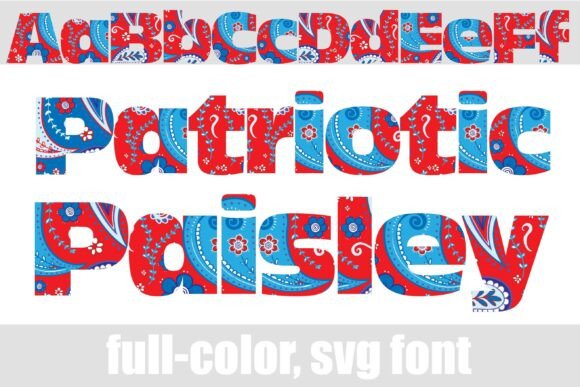
At its core, Patriotic Paisley is a full-color OpenType (SVG) font. This means each letter is a miniature, detailed illustration, filled with the rich, multi-hued paisley design. It’s a display font in the truest sense, designed to grab attention and set a specific tone. The chunky, sans serif foundation ensures it remains bold and legible even with its ornate fill, making it a powerful tool for headlines, logos, and any design where you want to make a strong, immediate impression.
But the real versatility lies in its alternate characters. Accessible through your system’s character map or design software like Silhouette Studio, these alt glyphs offer different color combinations for the paisley pattern. This allows you to subtly shift the mood of your design—from a more traditional red, white, and blue palette to one that incorporates softer pastels or bolder, non-traditional color schemes. It’s like having multiple fonts in one package, giving you creative control to match the exact vibe of your project.
Practical Applications for Designers and Creators
So, where does a font like this truly shine? Its unique aesthetic opens up a world of possibilities across both digital and physical mediums. For small business owners and entrepreneurs, it can become a cornerstone of a memorable brand identity. Imagine a boutique brewery using it for its logo and tap handles, or a vintage-inspired clothing line using it for its hang tags and social media headers. The font instantly communicates a sense of craftsmanship, individuality, and spirited Americana.
Content creators and marketers can leverage its visual punch for engagement. A blog post about summer recipes or Fourth of July crafts gets an instant upgrade with a Patriotic Paisley headline. It’s equally effective for eye-catching social media graphics, YouTube thumbnails, or podcast cover art that needs to stand out in a crowded feed. For those in packaging design or creating merchandise like t-shirts, mugs, and posters, this font provides a built-in design element that reduces the need for additional graphics, streamlining the creative process.
Even in more formal applications like editorial layouts or invitation design, it can be used strategically. A headline for a feature article on American craftsmanship or a subheading in a wedding invitation for a patriotic-themed celebration can benefit from its distinctive character. The key is intentionality—it’s not for body text, but for the moments where you want typography to be part of the visual narrative.
Integrating a Specialty Font into Your Workflow
Working with a premium font like this, especially one that uses color technology, comes with a few practical considerations. First, installation is straightforward—it’s an .OTF file installed just like any other font via FontBook on a Mac or your font manager on Windows. However, be aware that full-color SVG fonts will appear as solid black in programs that don’t support them. You’ll know your software is compatible when the colors render correctly as you type. Major players like Adobe Illustrator, Photoshop, InDesign, and Silhouette Studio offer full support, as do QuarkXPress and Inkscape.
When it comes to font pairing, less is more. Because Patriotic Paisley is so visually detailed, it pairs best with clean, simple companions. A neutral sans serif like Helvetica or Futura for body text, or a simple serif like Georgia, can provide a calm, readable counterbalance. This contrast ensures your main message remains clear while the headline font does its job of capturing interest. Always test your pairings in context to check for visual harmony and, crucially, for readability across different sizes.
Finally, always review the licensing for any commercial font asset. Ensuring your use complies with the license terms is a professional necessity, whether you’re creating a logo for a client, selling merchandise, or using it in digital products for sale. This due diligence protects your work and respects the font creator’s craft.
Choosing the Right Creative Asset for the Job
Selecting a typeface is a decision about voice and audience. A font like Patriotic Paisley isn’t a universal solution, but for the right project, it’s unparalleled. Ask yourself: Does my project call for a bold, decorative statement? Is my audience likely to appreciate a vintage or whimsical aesthetic? Am I aiming to evoke feelings of celebration, heritage, or playful nostalgia?
If the answer is yes, this font can significantly boost your project’s visual consistency and brand recognition. It becomes an instantly recognizable element of your visual identity. Its vector-based SVG format means it scales flawlessly from a small favicon to a large-format banner without any loss of quality, maintaining a professional presentation at every size.
In a landscape saturated with generic typography, reaching for a creative font with distinct personality can be the differentiator that makes your work memorable. It’s about giving your designs a voice that resonates, and sometimes, that voice is a vibrant, pattern-filled celebration of tradition with a modern twist.