Bloomies: A Playful Font for Brands That Want to Stand Out
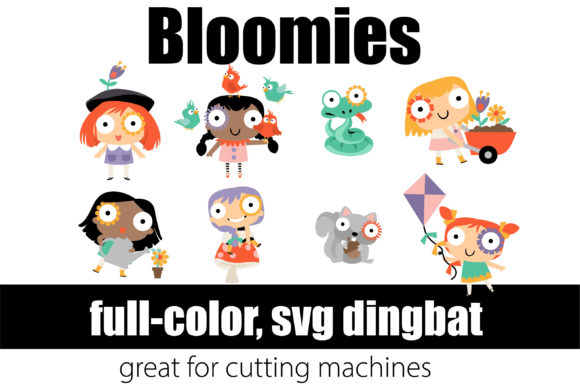
Let's be honest: most dingbat fonts are forgettable. They offer generic symbols that feel like an afterthought, clipart you’d scroll past without a second glance. Then you stumble upon something like Bloomies, and you realize a dingbat font can be a genuine design star. This isn't just a collection of symbols; it’s a full-color SVG typeface featuring adorable girls with flowers for eyes, each one bursting with personality. It’s the kind of asset that can inject a specific, joyful energy into a project, moving it from competent to captivating.
For the designer, crafter, or small business owner, finding a font that does more than just convey words is a game-changer. Bloomies operates in that sweet spot between illustration and typography. It’s a premium font built for impact, designed to draw the eye and create an immediate emotional connection. Think of it less as a utility and more as a creative collaborator. Its visual style—whimsical, feminine, and vibrant—makes it a natural fit for projects aiming for charm, playfulness, and a touch of modern sweetness.
Where a Font Like Bloomies Truly Shines
The real value of a specialized typeface like this is revealed in its application. It’s not for body copy in a legal document, but it’s perfect for grabbing attention and setting a mood. Consider how its unique character can serve different creative and commercial goals.
Building a Memorable Brand Identity: If your brand’s voice is friendly, approachable, and a bit playful, a character font like Bloomies can become a cornerstone of your visual identity. Use a single, striking glyph as a favicon, a social media profile picture accent, or as a recurring motif in your packaging design. A bakery, a children’s boutique, a floral studio, or a lifestyle blogger could use these characters to create a signature look that’s instantly recognizable and hard to forget.
Elevating Marketing and Packaging: In a crowded marketplace, packaging needs to tell a story at a glance. Imagine a Bloomies character peeking out from the corner of a soap label, a candle box, or a gift tag. It adds a layer of handmade care and whimsy that generic design cannot match. For social media graphics, these characters are scroll-stoppers. They can be used as standalone icons, part of a pattern, or to illustrate a point in a carousel post, making your content more engaging and shareable.
Crafting Invitations and Editorial Spreads: For event invitations—think birthdays, baby showers, or a garden party—the font sets the tone before a single word of the invitation text is read. In editorial design, such as a magazine feature on modern florals or a whimsical storybook, these glyphs can serve as charming decorative elements, breaking up text and adding visual interest to layouts.
Enhancing Digital Products and Web Design: As a creative font, it can add flair to digital planners, printable wall art, or educational worksheets. On a website, it could be used sparingly for hover effects, section dividers, or iconography to reinforce a brand’s playful aesthetic without compromising the site’s overall readability with a more standard serif font or sans serif font for the main text.
Practical Considerations for Using SVG Color Fonts
Adopting a full-color SVG font like Bloomies comes with a few practical notes worth understanding. First, installation is straightforward—it’s an .OTF file that you install just like any other font via your system’s font manager (FontBook on Mac, Control Panel on Windows). The magic happens in its rendering.
You’ll know your design program supports full-color SVG fonts when the characters appear in their vibrant, multi-colored glory as you type. Leading creative software like Adobe Photoshop, Illustrator, InDesign, and even specialized tools like Silhouette Studio, Quark, and Inkscape currently support this technology. In programs that don’t support color fonts, the characters will default to a solid black silhouette. This is a useful fallback, but it’s the color version that delivers the full personality.
When previewing the font in your software’s font menu, it will almost always appear in black. Don’t be alarmed. The color will manifest on your canvas once you apply the font. This is a common characteristic of SVG fonts across the board.
Pairing and Professional Presentation
The key to using a display font like Bloomies effectively is balance. Its strength is in its detail and personality, which means it should be used for headlines, logos, or accents, not for paragraphs of text. The goal is to let it shine without overwhelming the viewer.
This is where thoughtful font pairing becomes essential. Partner Bloomies with a clean, neutral typeface to create hierarchy and ensure readability. A classic sans serif font like Montserrat or Lato provides a modern, stable counterpoint. For a softer, more complementary feel, a simple script font or a gentle handwritten font could work, but always test the combination to ensure the accent font doesn’t compete for attention.
Consider the weight and spacing. Because the Bloomies characters are detailed illustrations, they work best with a bit of breathing room. Adjusting tracking (letter-spacing) slightly can prevent them from feeling crowded, especially in logo design or on merchandise where the glyph might be viewed up close.
A Final Thought on Creative Assets
Choosing a font is ultimately a strategic decision. It’s about aligning a visual tool with a project’s goals and audience. Bloomies offers a very specific, joyful aesthetic. For the right project—whether it’s branding a new venture, designing a line of products, or creating marketing materials that need to feel personal and delightful—it’s more than just a typeface. It’s a design asset that brings its own narrative, helping to build a visual world that’s engaging, consistent, and unmistakably unique. In a landscape where standing out matters, having a character font like this in your toolkit opens up a world of creative possibilities that go far beyond the standard alphabet.